0%

Choosing Commercial Gym Equipment is a long-term operating decision, not just a showroom comparison. A treadmill may look impressive under bright lights, but daily use reveals its maintenance needs, noise, and ease of repair. For gym owners, buyers, and facility managers, brand quality affects member experience and operating costs.

The market is expanding, but market growth alone does not prove that any brand is dependable. Grand View Research estimated the global fitness equipment market at $16.04 billion in 2022 and projected a 5.3% compound annual growth rate from 2023 to 2030. Its report covers fitness equipment broadly, not commercial brands alone. That distinction matters. The American College of Sports Medicine’s 2025 Worldwide Survey of Fitness Trends also highlights ongoing interest in strength training, functional fitness, and technology-supported exercise. Together, these sources point to varied equipment needs, from sturdy racks and selectorized machines to connected cardio consoles.

This guide compares ten commercial gym equipment brands for 2026, focusing on product range, construction, service support, warranty terms, and suitability for different facilities. A boutique studio may need compact, flexible stations; a high-traffic health club may prioritize service access and replacement parts. No ranking can fit every budget or floor plan. And a famous name is not a guarantee. Buyers should verify local service coverage, total ownership costs, and equipment fit before signing.
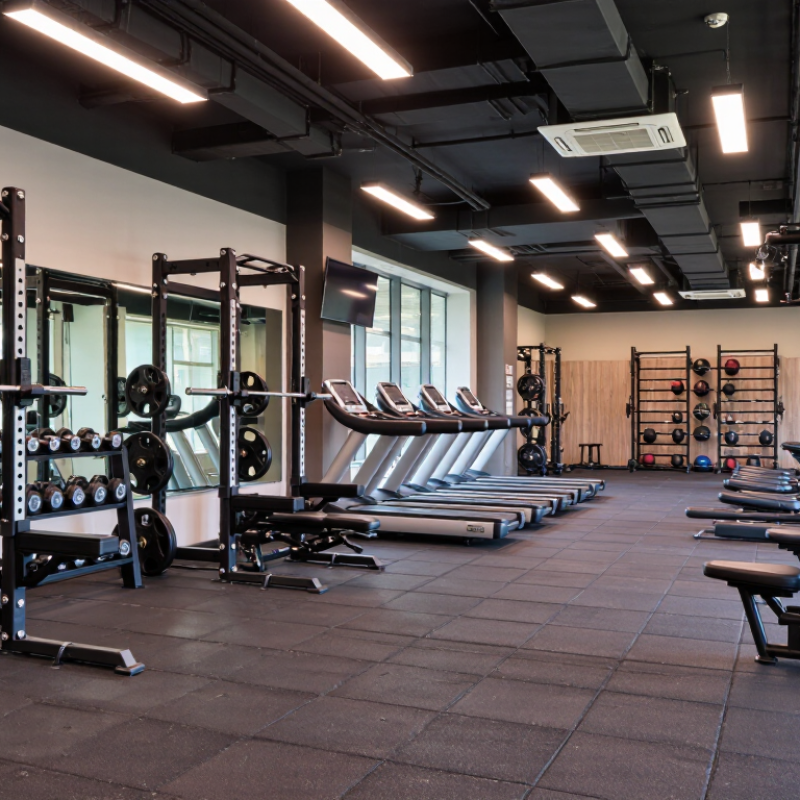
10 Best Commercial Gym Equipment Brands in 2026

What Defines a Commercial Gym Equipment Brand?

A commercial gym equipment brand is defined by more than a polished product range. Its machines must tolerate repeated use, varied body sizes, and quick changes between users. During a busy evening, a treadmill may run for hours while weight-stack pins move dozens of times. Frames, cables, upholstery, and adjustment points all need to hold up under that routine. That matters.

Safety and serviceability are equally important. Clear adjustment labels, stable footing, smooth cable travel, and accessible maintenance points reduce avoidable problems for staff and members. A facility manager should be able to find load limits, care instructions, warranty terms, and replacement-part information without guesswork. Small details count. A loose seat handle can disrupt a workout, even when the machine looks impressive.

A credible supplier also supports equipment after installation, with practical troubleshooting and a realistic parts plan. Claims about durability are more useful when backed by testing information and written service commitments. Still, no checklist captures every gym. A small studio and a high-traffic recreation centre face different demands, and even well-built equipment needs inspection. A thoughtful buyer compares expected use with maintenance needs, rather than treating price or appearance as proof of commercial quality.

What Defines a Commercial Gym Equipment Brand?

A practical buyer’s framework for evaluating commercial-grade equipment.

The percentages are an editorial weighting framework, not results from a market survey. They highlight factors buyers can assess when comparing equipment: durability, safety, service support, usability, and value.

How the Top Brands Were Evaluated for 2026

For this 2026 assessment, commercial equipment was compared on durability, user fit, service support, and total ownership cost. Public specifications and warranty terms were checked alongside practical details: frame stability, adjustment range, cable smoothness, and whether common parts are easy to replace. A low purchase price means little if a busy facility faces frequent downtime. No scoring model is perfect.

The American College of Sports Medicine’s 2025 Worldwide Survey of Fitness Trends ranked wearable technology first and traditional strength training fifth. These findings informed our attention to both connected features and dependable, hands-on training equipment. We considered whether consoles share useful workout data, but treated connectivity as a bonus, not proof of quality. More screens do not automatically make a better machine.

The Health & Fitness Association’s 2024 U.S. Health & Fitness Consumer Report counted 72.9 million Americans as fitness-facility members in 2023. That scale makes comfort, accessibility, and maintenance relevant beyond showroom appeal. We looked for clear instructions, stable entry points, and settings that accommodate varied body sizes. Ratings still depend on available evidence; service quality can differ by location, and glossy specifications cannot reveal every repair issue. That limitation deserves attention.

10 Best Commercial Gym Equipment Brands in 2026 — How the Top Brands Were Evaluated for 2026 Evaluation framework: weighted criteria for comparing commercial fitness equipment; no manufacturer-specific scores or rankings are shown.
Evaluation criterion Weight What is assessed Evidence to review
Durability and build quality 18% Construction, materials, stability, and suitability for frequent use in shared facilities. Frame and component specifications, stated testing procedures, and published maintenance guidance.
Performance and reliability 15% Consistent operation and performance across the equipment’s intended training use. Product specifications, operating requirements, and documented service or reliability information.
Safety and standards 12% Safety features, user guidance, and relevant conformity or certification information where applicable. Safety instructions, product documentation, and applicable standards or certification records.
Warranty and service support 12% Warranty coverage, clarity of terms, parts availability, and access to commercial service support. Published warranty terms, service policies, and parts or support documentation.
Product range and training coverage 10% Availability of equipment across common facility needs, such as strength, cardio, and functional training. Current product catalogs and published equipment categories.
Ergonomics and adjustability 9% Ease of adjustment, clarity of controls, and accommodation of a range of users and training positions. Product dimensions, adjustment features, user instructions, and in-person equipment assessment.
Maintenance requirements 8% Routine care needs, service access, and the practicality of keeping equipment in working condition. Care schedules, service manuals, replacement-part information, and stated maintenance procedures.
Facility fit and installation 6% Space, power, flooring, delivery, and installation requirements relevant to commercial facilities. Published footprints, utility requirements, installation guidance, and delivery information.
Technology and connectivity 5% Availability and practicality of features such as consoles, workout tracking, and connectivity. Product feature lists, compatibility details, and user documentation.
Total cost of ownership and value 5% How purchase and operating considerations compare with the equipment’s features and intended use. Comparable price quotes, warranty terms, power needs, and maintenance or replacement-part information.
Total weighting 100% Weights describe the evaluation framework and are not product ratings.

The 10 Best Commercial Gym Equipment Brands in 2026

Choosing among the 10 best commercial gym equipment brands in 2026 means looking beyond polished displays. A treadmill can feel smooth during a brief demo but behave differently after a full day of use. Check frame stability, adjustment speed, warranty terms, and access to replacement parts. Small details matter.

Demand makes those checks practical, not fussy. The Health & Fitness Association’s 2024 U.S. Health & Fitness Consumer Report recorded 72.9 million U.S. health club and studio members in 2023. Meanwhile, ACSM’s 2024 Worldwide Fitness Trends survey ranked strength training with free weights seventh among 45 trends. That supports comparing both cardio and strength equipment, rather than choosing a catalog built around one training style.

A useful shortlist should also weigh service response times, clear maintenance instructions, and equipment fit for different body sizes. Ask operators about actual repair waits, not just promised coverage. Test seat adjustments with sweaty hands. It sounds minor. Still, a rushed adjustment can disrupt a busy circuit. No ranking captures every floor plan, and equipment that suits a large club may crowd a neighborhood studio. Compare total ownership costs, then leave room for firsthand testing.

How the Brands Differ by Equipment and Facility Type

Commercial gym equipment brands differ most in the facilities they serve well. A hotel fitness room may need compact treadmills, adjustable benches, and dumbbells that store neatly. Space is the constraint. A strength-focused club usually needs heavy racks, plate-loaded machines, and flooring that handles repeated drops. Those practical details matter more than a long feature list.

Cardio-focused facilities should compare service access, belt feel, noise, and console simplicity. In a busy gym, an easy-to-maintain treadmill may be more useful than one with extra screens. Small studios often favor cable stations and selectorized machines because members can change exercises quickly. But not always. Some studios need open floor space for classes, making every large unit a trade-off.

Facility managers can inspect welds, adjustment points, upholstery seams, and replacement-part availability. Ask how often routine service is expected, then test equipment with users of different heights. A showroom visit helps, but it cannot mimic a crowded Monday evening. That gap is easy to miss. Schools and community centers may value simple controls and parts local technicians can replace. Premium finishes look appealing, yet they may not solve the daily bottleneck.

What Buyers Should Consider When Choosing a Brand

A commercial gym equipment brand should be judged by more than its product range. Start with the people who will use the equipment: beginners, experienced lifters, or both. Check whether seats, handles, and adjustment points suit different body sizes. A selectorized machine should move smoothly, with clear weight markings and no awkward reach. Try it under realistic conditions, not just in a quiet showroom.

Then look beyond the purchase price. Ask how long common replacement parts take to arrive, who handles repairs, and what the warranty excludes. A machine that sits idle for weeks can cost more than a higher-priced model with dependable service. Request references from facilities with similar traffic, and ask about actual maintenance schedules. Paperwork helps. So does a phone call.

Space and daily upkeep matter, too. Measure doorways, delivery routes, and the area needed for safe movement around each unit. Inspect upholstery seams, cable access, and surfaces that staff must wipe between uses. Confirm that the equipment fits your flooring and cleaning routine. If digital features are included, test whether the data works with your existing systems. It is easy to overvalue a polished demo; real use can expose clumsy settings or unnecessary complexity. Even a thorough checklist may miss something, so keep a small budget for adjustments after installation.

FAQS

What should buyers check before choosing commercial gym equipment?

Test frame stability, adjustment speed, and movement quality. A smooth showroom demo may not reflect a full day of use.

How can a gym assess equipment fit for different users?

Try seats, handles, and adjustment points with people of different body sizes. Check whether weight markings are clear and controls are easy to reach.

Why should buyers ask about replacement parts and repairs?

Ask how long common parts take to arrive and who handles repairs. A machine left idle for weeks can cost more than expected.

What details matter when planning equipment delivery?

Measure doorways, delivery routes, and safe movement space around each unit. Small details matter.

How can a gym compare warranty coverage?

Review what the warranty includes and excludes. Ask similar facilities about real repair waits, not only promised coverage.

What should buyers inspect for daily cleaning?

Check upholstery seams, cable access, and surfaces staff must wipe between uses. Confirm the equipment suits the facility’s cleaning routine.

Do digital features always make equipment a better choice?

Not necessarily. Test whether the data works with existing systems and whether settings feel simple during actual use.

Why compare both cardio and strength equipment?

A 2023 U.S. report recorded 72.9 million health club and studio members. A 2024 fitness survey ranked free-weight strength training seventh among 45 trends. These figures support comparing varied equipment, though they cannot predict every facility’s needs.

Is a detailed checklist enough to prevent problems?

It helps, but it may miss installation adjustments or floor-plan issues. Keep some budget aside. Real use can still surprise you.

Conclusion

This guide explores what makes a Commercial Gym Equipment brand suitable for professional use, from durable construction and consistent performance to service support and product range. It also explains how the leading options for 2026 can be evaluated using practical factors such as reliability, safety features, user experience, maintenance needs, and overall value. The overview introduces ten top-performing brand profiles without focusing on names, helping readers understand the qualities that distinguish strong commercial suppliers.

Because facilities have different goals, the guide compares equipment options for strength training, cardio, and versatile training spaces, as well as for gyms of different sizes and user groups. It concludes with key considerations for buyers, including available space, budget, expected usage, warranty coverage, and future expansion. By weighing these factors together, facility owners can build an equipment plan that meets their members’ needs and supports dependable day-to-day operation.

Charlotte

Charlotte

Charlotte is a marketing professional with in-depth knowledge of the company’s products and the needs they are designed to address. Combining product expertise with a clear understanding of customer priorities, Charlotte helps make complex information accessible, useful, and easy to apply. They......